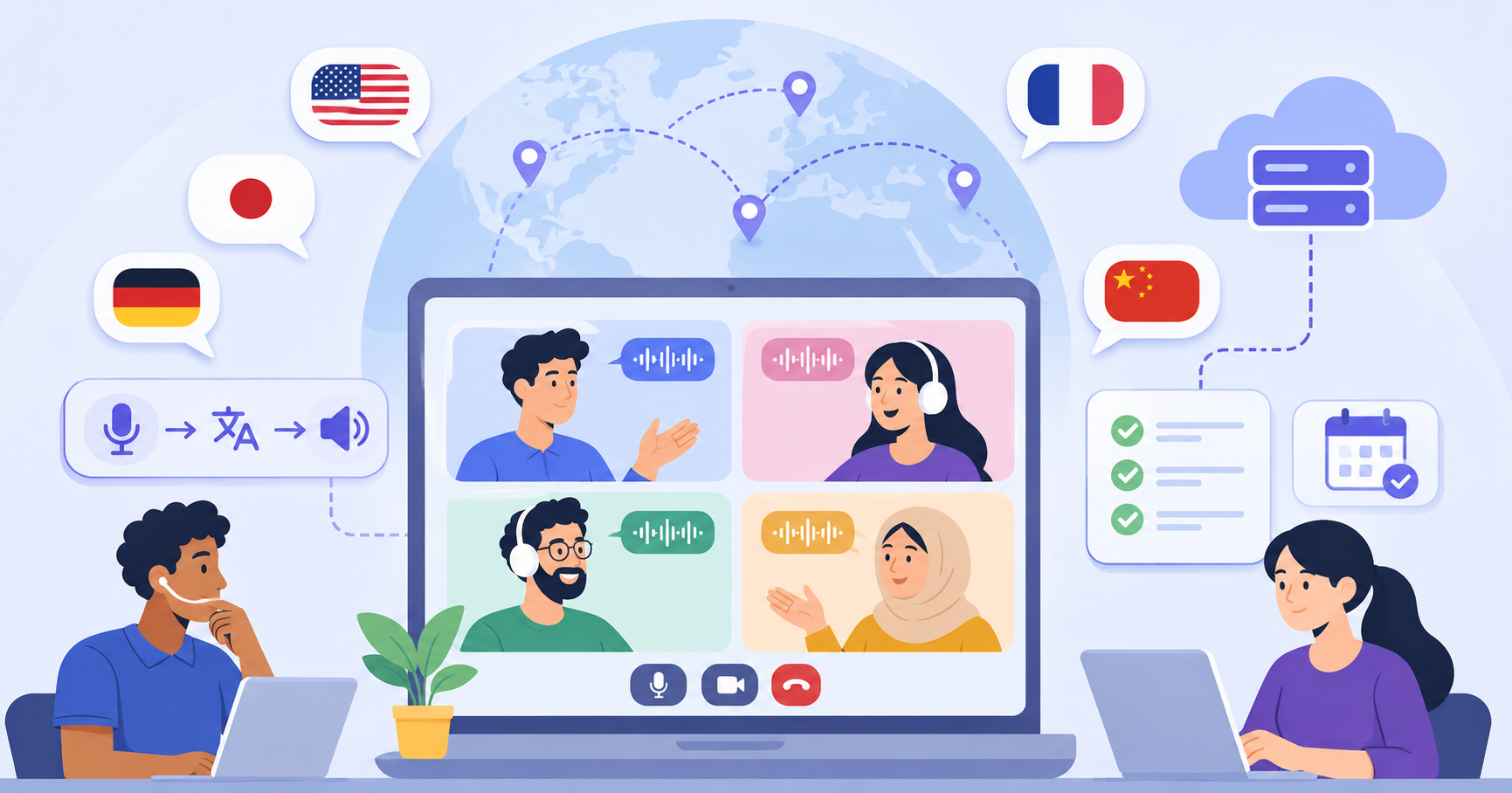
How Speech Recognition Errors Affect Real-Time AI Translation
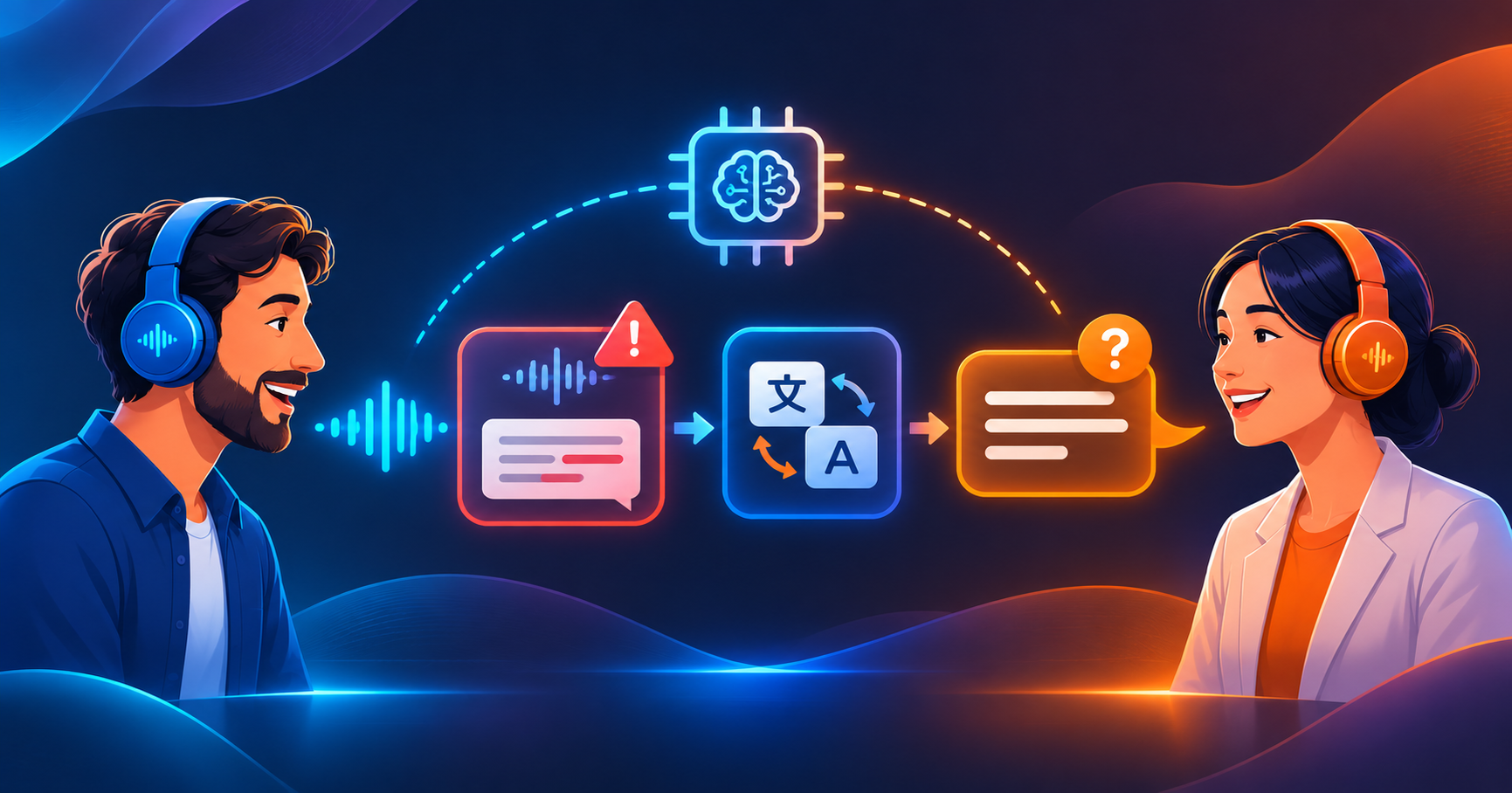
When people think about AI translation, they usually focus on how accurately a system converts one language into another. But there is another important part of the process: understanding what the speaker actually said.
Real-time speech translation often relies on ASR to recognize spoken words before translating them. If the original speech is misunderstood, the error can affect the translated message.
Understanding this relationship helps developers evaluate the complete speech translation workflow.
What Is Speech Recognition in Real-Time Translation?
Automatic Speech Recognition converts spoken language into text that other components can process.
A common speech-to-speech translation architecture uses three stages:
- Speech recognition (ASR): Converts incoming audio into text.
- Machine Translation (MT): Translates the recognized text into another language.
- Text-to-Speech (TTS): Converts translated text into spoken audio.
This is known as a cascaded pipeline. However, not every system follows this architecture. Some end-to-end speech translation models can translate audio directly without generating an intermediate text transcript.
How Can Speech Recognition Errors Affect Translation?
Consider a speaker saying:
"Send fifteen units to the warehouse."
If the recognition system identifies "fifteen" as "fifty", the translation component may receive the incorrect number and carry that mistake into the translated output.
The translated speech might sound fluent, but the information is wrong.
Similar problems can affect:
- Numbers and quantities: Incorrect recognition can change measurements, prices or order quantities.
- Names and product terms: Unfamiliar names may be recognized as different words.
- Instructions: Missing words such as "not", "before" or "unless" can change a message's meaning.
- Technical terminology: Industry-specific expressions may be difficult to recognize correctly.
These errors can propagate through a cascaded pipeline, although later processing may sometimes correct them using additional context.
What Makes Speech Recognition Difficult?
Several conditions can affect recognition quality.
Background noise: Machinery, traffic and nearby conversations can make speech harder to distinguish.
Different accents: Pronunciation varies across regions, and recognition performance can differ between speakers.
Fast or unclear speech: People often speak quickly, pause unexpectedly or change sentences while talking.
Overlapping conversations: Multiple speakers talking simultaneously make it harder to identify individual words.
Specialized vocabulary: Product names, abbreviations and technical expressions may be unfamiliar to a general-purpose recognition model.
How Can Developers Measure Speech Recognition Accuracy?
One commonly used metric is Word Error Rate (WER). It compares an automatically generated transcript against a human-verified reference transcript.
WER accounts for three types of errors:
- Insertions: Extra words added by the system.
- Deletions: Words missing from the transcript.
- Substitutions: Words recognized incorrectly.
The formula is:
WER = (Substitutions + Deletions + Insertions) / Total reference words
A lower WER generally indicates better transcription accuracy.
However, WER does not measure the full meaning of a translated conversation. A single incorrect number or instruction can be more important operationally than several minor transcription differences.
Developers should therefore combine transcription metrics with human review and tests of the final translated output.
How Can Developers Improve Recognition Reliability?
There is no single configuration that guarantees accurate recognition in every environment. Practical evaluation should include:
- Check audio input: Test microphone quality and the audio conditions expected in real use.
- Test different speakers: Include regional accents and different speaking speeds.
- Evaluate important vocabulary: Check names, numbers and technical terms.
- Review recognition output: Compare generated transcripts against the original speech.
- Test streaming behavior: Check whether partial transcripts change as more speech context becomes available.
- Measure end-to-end performance: Evaluate recognition, translation and speech generation together.
Streaming systems may revise partial recognition results as additional context arrives. Developers need to consider the trade-off between showing results quickly and waiting for more stable output.
Final Thoughts
Accurate real-time speech translation begins with understanding the original speech. Recognition errors can affect the translated message, particularly when conversations contain numbers, instructions or specialized terminology.
For businesses evaluating translation solutions, speech recognition should be considered alongside translation quality, language coverage, audio conditions and response time.
For a broader business perspective, how accurate AI translation is in real-world conversations explains the factors that influence translation quality and what organizations should evaluate before adopting AI translation.
The key takeaway: A reliable speech translation system needs to recognize and interpret the original message correctly before it can deliver a useful translation.
What do you think creates the biggest challenge for speech recognition: background noise, regional accents or industry-specific vocabulary?
About the author
Passionate about crafting meaningful content that bridges the gap between business needs and tech solutions. At BizzAppDev, Saurabh specializes in communicating the power of Odoo through storytelling, strategy, and clear messaging. When he's not writing or optimizing content, he's diving deep into the latest Odoo features and ERP trends.
Comments
Join the discussionNo comments yet. Be the first to comment.